Begun in the early 1880s, the Waterworks Pumping Station No. 1 Pumphouse (Former) at 544 Tuam Street, Phillipstown, Christchurch, is a building complex that played a critical role in effecting significant improvement in the overall amenity of the city and the lives of Christchurch residents. It has historical, social, and technological significance in its ability to tell the story of how Christchurch developed a coordinated, city-wide drainage system that served as an exemplar both nationally and internationally. In its utilitarian design with classical detailing and craftsmanship, the Waterworks Pumping Station No. 1 Pumphouse also has architectural and aesthetic value.
The Christchurch Drainage Board was established in the mid-1870s to address the issue of poor drainage of stormwater and sewage disposal that was having serious health implications for the dwellers in this flat swampy city. The Board was tasked with planning and constructing a systematic drainage and sewerage network and they engaged an English civil engineer, William Clark, as consulting engineer. The key point of Clark’s comprehensive scheme, approved by the Drainage Board in 1878, was that wastewater flows were to be admitted into the sewers, but kept completely separate from stormwater to avoid contamination. The first stage was the construction, during the early 1880s, of pipelines that took sewage from the city by gravitation to holding tanks beneath the Waterworks Pumping Station No. 1 Pumphouse, in Tuam Street. Sometimes known as the Drainage Pumping Station, this brick building was designed by Clark to house the engines and pumps which would pump the sewage in 61 centimetre cast iron pipes to Bromley. The work was carried out by Thomas Parsons as contractor. After overcoming many challenges due especially to unstable soil, the pumping of sewage at the Waterworks Pumphouse Station finally took place as a fully operational system in early 1882.
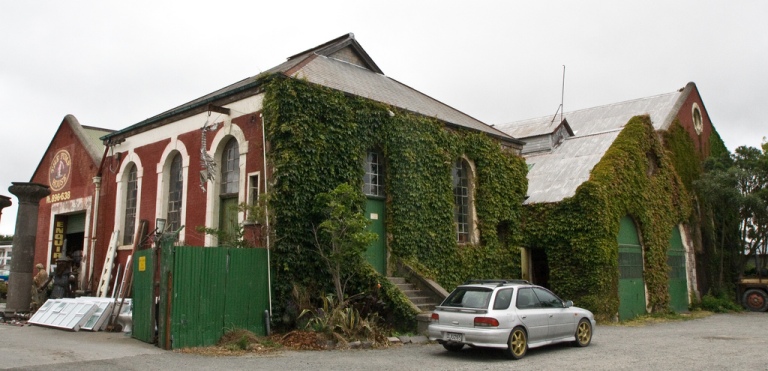
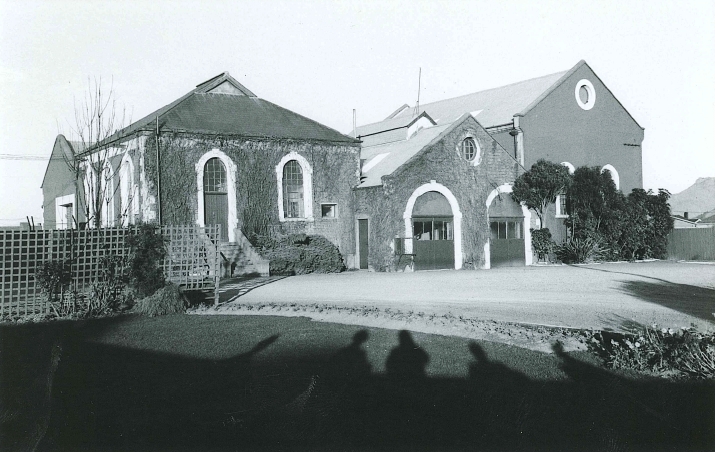
The Waterworks Pumping Station No. 1 Pumphouse (Former) is a building constructed of brick with Oamaru stone detailing, steel windows, and slate and corrugated iron roofing. It is a utilitarian structure with multiple gabled roofs and restrained classical detailing, including distinctive arched windows and doors, and round windows in some of the gables. It is possible that some of the pump and drainage technology remains in the sub-floor area of the building and within the setting.
The original building has been enlarged over time, and altered as machinery was updated. The Waterworks Pumping Station No. 1 Pumphouse (Former) building at Tuam Street continued to play a key role in the disposal of city sewage until 1957 when the Drainage Board opened a new pumping station in Pages Road. The Tuam Street site then became used as a maintenance depot until the 1980s, when the Board ‘vacated its most historic site, where the city’s sewage system was born’. Alterations of the building have included the removal of the furnace stack and removal of pump machinery and, after the Canterbury earthquakes of 2010-11, structural strengthening and demolition of a lean-to at the rear of the building. The property currently operates as a salvage yard. The building is the subject of two well-known paintings by Christchurch artist, Doris Lusk.
The Christchurch Drainage Board was established in the mid-1870s to address the issue of poor drainage of stormwater and sewage disposal that was having serious health implications for the dwellers in this flat swampy city. The Board was tasked with planning and constructing a systematic drainage and sewerage network and they engaged an English civil engineer, William Clark, as consulting engineer. The key point of Clark’s comprehensive scheme, approved by the Drainage Board in 1878, was that wastewater flows were to be admitted into the sewers, but kept completely separate from stormwater to avoid contamination. The first stage was the construction, during the early 1880s, of pipelines that took sewage from the city by gravitation to holding tanks beneath the Waterworks Pumping Station No. 1 Pumphouse, in Tuam Street. Sometimes known as the Drainage Pumping Station, this brick building was designed by Clark to house the engines and pumps which would pump the sewage in 61 centimetre cast iron pipes to Bromley. The work was carried out by Thomas Parsons as contractor. After overcoming many challenges due especially to unstable soil, the pumping of sewage at the Waterworks Pumphouse Station finally took place as a fully operational system in early 1882.
The Waterworks Pumping Station No. 1 Pumphouse (Former) is a building constructed of brick with Oamaru stone detailing, steel windows, and slate and corrugated iron roofing. It is a utilitarian structure with multiple gabled roofs and restrained classical detailing, including distinctive arched windows and doors, and round windows in some of the gables. It is possible that some of the pump and drainage technology remains in the sub-floor area of the building and within the setting.
The original building has been enlarged over time, and altered as machinery was updated. The Waterworks Pumping Station No. 1 Pumphouse (Former) building at Tuam Street continued to play a key role in the disposal of city sewage until 1957 when the Drainage Board opened a new pumping station in Pages Road. The Tuam Street site then became used as a maintenance depot until the 1980s, when the Board ‘vacated its most historic site, where the city’s sewage system was born’. Alterations of the building have included the removal of the furnace stack and removal of pump machinery and, after the Canterbury earthquakes of 2010-11, structural strengthening and demolition of a lean-to at the rear of the building. The property currently operates as a salvage yard. The building is the subject of two well-known paintings by Christchurch artist, Doris Lusk.